 New Jersey Criminal Lawyers Blog


 Many people use their social media platforms to vent, boast, share family news, and connect with friends old and new. Some use their posts to incite reactions or encourage conversation. For the most part, your posts have little impact outside of your personal circle of followers unless, that is, you are facing criminal charges. Under these circumstances, your social media posts could potentially have devastating implications.
Social media activity may be used as evidence in criminal investigations. Depending on the subject matter, they can be used to directly implicate someone in the commission of a crime or, at the very least, damage their credibility.
Law enforcement agencies can use public posts, as well as private posts with the proper warrants, as evidence in their criminal investigation. This includes status updates, photos, and videos. Even posts by other individuals in which the accused is tagged can be used as evidence. Remember, once something is on the internet, it is there forever. This means deleted posts can be recovered and, if relevant, used against you in a criminal case.
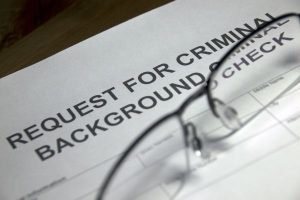 It is to be expected that a person convicted of a crime will be sentenced to time in jail or prison, which may be followed by a period of parole or another form of community supervision. The convicted individual may also be ordered to pay certain financial penalties in the form of fines, court fees and/or restitution to the victims of the crime or their families. Oftentimes, however, the penalties for committing a
  Chances are if you are looking for a criminal defense attorney, your needs are immediate. That doesn’t mean, however, that you shouldn’t do your due diligence to find the right attorney for your case.
 In New Jersey, probation is a court-ordered period of supervision imposed as an alternative to incarceration, allowing an individual convicted of a
  Recognizing that young minds are still developing and learning, our justice system allows for
  When you are accused of a crime, guilty or not, how you react initially matters. Resisting law enforcement, claiming your innocence, attempting to direct suspicion elsewhere can all work against you in the end. Although it is a stressful situation, remain as calm as possible and adhere to the following:
 It is the prosecutor’s job to build cases with sufficient evidence to show probable cause that a crime has been committed and that the defendant is responsible for the crime as charged. To do this, he or she must be familiar with law enforcement techniques in criminal investigation, understand how to gather and present evidence, and know how to interview and prepare witnesses. A prosecutor must also possess a strong understanding of what evidence is necessary to prove the case beyond a reasonable doubt at trial. A prosecutor also knows what would constitute a fair plea offer recommendation and disposition.
 The Trial
 The Grand Jury
 The Arrest